Sea fishing is free in both countries
Fishing with a rod or handline in the sea is free in both Norway and Sweden, for residents and visitors alike. You need no licence and no registration, anywhere along either coast.
What you do need to follow are minimum sizes, closed seasons and local bans, and they differ between the two countries. Cod is protected in many areas: the stock is weak in southern Norway, and in the Swedish part of the Baltic, fishing for cod is heavily restricted. In Sweden you may not fish for eel at all. The rules change regularly, so check them before your trip with the Norwegian Directorate of Fisheries or on Svenska fiskeregler for Sweden.
Salt Atlantic water and the brackish Baltic
The Norwegian coast and the Swedish west coast, from the Öresund up through Halland and Bohuslän, face salt Atlantic water. Here you find the classic sea species: cod, saithe, mackerel and flatfish.
The Baltic is different. Its water is so low in salt that many freshwater fish thrive in it, so along the Swedish east coast and in the Stockholm archipelago you fish for pike and perch in the sea. The cod family and mackerel are rare or absent there.
The cod family: the everyday fish of the coast
Most of the fish caught along the Norwegian coast and the Swedish west coast belong to the cod family. They stay close to the bottom or hunt in the current, and they take jigs, spoons and bait alike. The further north you go in Norway, the closer to shore and the more plentiful they are.
 Atlantic codFound along the whole Norwegian coast and the Swedish west coast. Jigs, spoons and bait, from shore in the north and mostly from boats in the south.
 SaitheA schooling fish that hunts in the current. Shiny spoons from piers and headlands, best in the evening.
 PollackHolds by kelp forests and underwater ridges in southern Norway and Bohuslän. Soft lures worked slowly near the bottom.
 HaddockLives over sand and mud, usually in deeper water. Bites well on shrimp and pieces of mackerel.
 LingA long, slender fish of hard bottoms and deep water. Heavy jigs or bait from a boat.
 WhitingA small member of the cod family that comes close to shore in autumn and winter, in both countries.
Caught one you do not recognise? The whole family is pictured in the overview of fish species.
Mackerel, herring and garfish: the summer shoals
In summer the schooling fish move in towards the shore, and even a simple quay can produce fish. If you see small fish breaking the surface, there are often mackerel or saithe underneath, so get your lure out quickly.
 MackerelArrives along the Norwegian coast and the Swedish west coast from early summer. A string of feathers or a shiny spoon where the shoal breaks.
 HerringCalled strömming in the Baltic. Small glittering hooks on a sabiki-style rig, often from a quay or pier.
 GarfishThe slim, beaked fish with green bones. Shows up in May and June in both countries and takes light spoons.
Flatfish on the sandy bottom
Flatfish lie buried in sand and mud and are best caught with bait lying still on the bottom. Shallow sandy beaches, bays and river mouths are good places to start, and the fishing is often best at dusk and at night.
 PlaiceRecognised by its orange spots. Bait on the bottom over sand, from the beach or a boat.
 FlounderTolerates brackish water, so it is found along both coasts and well into the Baltic. Worm on the bottom.
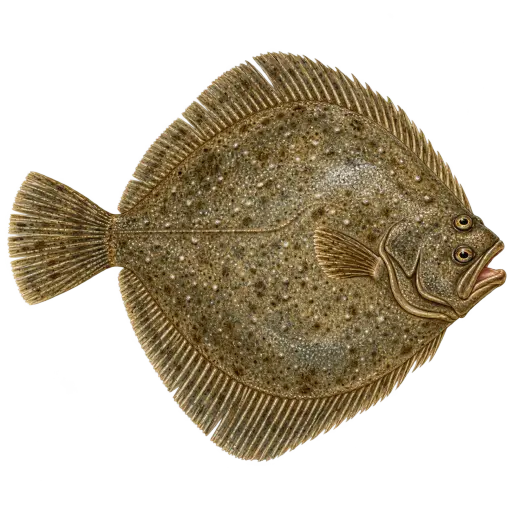 TurbotA large flatfish of sandy bottoms in the south, on the Swedish west coast and in the southern Baltic.
 Atlantic halibutCan grow over two metres long. Large soft lures from a boat, especially in northern Norway.
Halibut in Norway has its own rules during the winter spawning season, and there are size limits on what you may keep. Check the current rules before fishing for it.
The Baltic: pike and perch in the sea
In the archipelagos along the Swedish east coast, freshwater predators live in the sea. Shallow, reedy bays warm up quickly in spring and hold some of the largest pike in Sweden.
 PikeLarge lures and jerkbaits in shallow archipelago bays, best in spring and autumn.
 PerchThrives in brackish water and is caught throughout the archipelago on jigs, spinners and bait.
Many shallow bays are closed to fishing while the pike spawn in spring, and some areas limit how many pike you may keep. Check what applies where you are going.
Sea trout, ballan wrasse and sculpin
Sea trout is the same species as the brown trout in fresh water, but grows large at sea. It is fished from shore for much of the year along both the Norwegian coast and the Swedish coasts, with Skåne, Blekinge and Gotland among the best known areas in Sweden. Sea trout fishing in salt water has regional rules and closed seasons in both countries.
 Sea troutFished from beaches and rocky shores with light spoons and flies, best in spring and autumn.
 Ballan wrasseA colourful wrasse of the kelp forests in southern Norway and on the Swedish west coast. Bait close to the kelp.
 Shorthorn sculpinBig head and spines on the gill covers. Bites on almost anything from the quay, and is often a child’s first fish.
Taking fish home from Norway
If you are visiting Norway, there are strict limits on how much fish you may take out of the country, and the rules depend on whether you fish through a registered fishing tourism business. The limits have changed several times in recent years, so read the current rules from the Norwegian Directorate of Fisheries before you plan to freeze your catch.
How to find fish from shore
On salt coasts, look for places where deep water comes close to land: piers, headlands, rocks that drop steeply and sounds with current. The current carries food, and that is where saithe, cod and pollack often hold. In the Baltic, look instead for shallow bays and reed beds, where pike and perch gather as the water warms in spring.
Morning and evening usually produce more fish than the middle of the day, especially in summer. An onshore wind pushes food towards the coast, and overcast weather makes fish less shy. If you plan to fish lakes and rivers as well, the species there are covered in the guide to freshwater fish in Norway and Sweden.
Questions and answers
Do I need a fishing licence to fish in the sea in Norway or Sweden?
No. Fishing with a rod or handline in the sea is free in both countries, including for visitors. You still need to follow minimum sizes, closed seasons and local bans, and some species, such as cod in parts of both countries and eel in Sweden, are protected.
Which saltwater fish are easiest to catch from shore?
Mackerel in summer, and saithe and cod from piers and headlands on the Norwegian coast and the Swedish west coast. In the Baltic, perch and pike in the archipelago bays are the most rewarding, and herring from a pier is good fishing for children.
How many saltwater fish species are there in the Nordic countries?
The MinFangst register has 214 saltwater species in Nordic waters, from common coastal fish to rare deep-sea species. The full list with pictures is in the overview of fish species.